Manual processes
Spreadsheets, notes, ad hoc exports, till reads, PDQ totals, and group chats still carry too much of the operation.
Tools for operators. Intelligence for partners.
GiM Operations builds lightweight tools that help hospitality teams work faster on the systems they already have — while exploring aggregate, privacy-conscious signals that suppliers and partners cannot usually see.
ABV: Always Bring Value. Free tools first. Signal second.
Service note: Because 'just export the spreadsheet' is not an operating model.
Current status: MiX and GiM are built and pilot-ready. GiM Operations is preparing an Edinburgh live pilot and inviting selected supplier-side observers to review the first anonymised signal reports.
Human diagnostic layer
Hospitality venues leak money, time, and customer attention in places that rarely show up cleanly on a till report.
GiM Venue Diagnostic is a practical walk-through for bars, restaurants, cafes, clubs, and mixed-use hospitality spaces that want a blunt outside view on what could work better.
We look at the offer, layout, service rhythm, menu visibility, supplier opportunities, customer flow, upsells, event potential, staff friction, and obvious operational drag.
First diagnostic is free. You receive a short one-page opportunity map. If you do not use it, you do not pay. If you want to act on it, GiM moves into a paid activation or scoped project.
Working nearby on practical tools and diagnostics for hospitality venues. We are offering a small number of free venue opportunity audits locally: a quick outside look at layout, offer, customer flow, upsells, supplier angles, and obvious revenue leaks. No charge unless you decide to use the recommendations.
No bloated reports. No corporate theatre. Just practical hospitality thinking from people who understand live service.
Member networks
GiM Operations Ltd is a member of Barclays Eagle Labs, Techscaler, and CodeBase communities.
The problem
Independent venues and legacy hospitality sites rely on manual processes, fragmented tools, staff memory, old POS systems, spreadsheets, group chats, and late-night reconciliation. Suppliers and partners often see orders, invoices, and account notes — but not the operational behaviour that happens before those records exist.
Spreadsheets, notes, ad hoc exports, till reads, PDQ totals, and group chats still carry too much of the operation.
Knowledge leaves with every shift change.
Legacy systems do not expose clean, modern operational data.
Managers still hunt variance after service, when everyone is tired.
Suppliers see orders, not the moments before them.
Service note: No exhausted manager has ever said, 'What I need right now is another portal.'
GiM operating family
GiM Operations uses small, practical tools to solve immediate venue problems before asking for deeper commercial conversations. The portfolio should feel closer to a supplier range than a software menu.
Fast spec lookup for bar teams
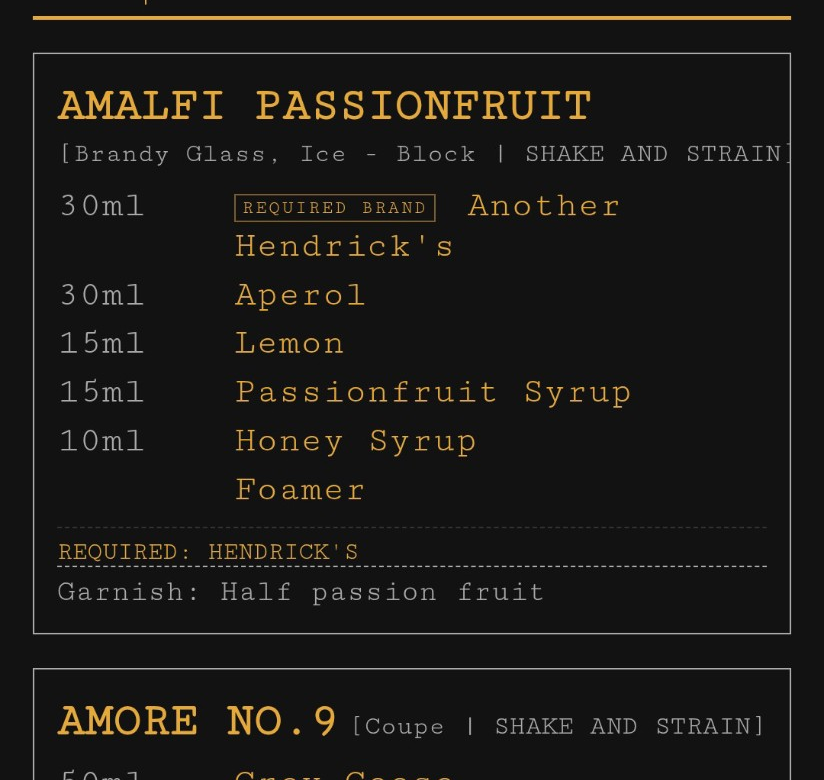
MiX is built and pilot-ready. It helps staff find cocktail specs, serves, ingredients, venue notes, and training references during live service.
For the bartender who does not have time to scroll through a PDF while six people stare at them.
End-of-night reconciliation support
A future build track for reducing variance stress across POS, PDQ, cash, and close-down reports. EON is not part of the current pilot-ready toolset.
Edge-native venue utility layer
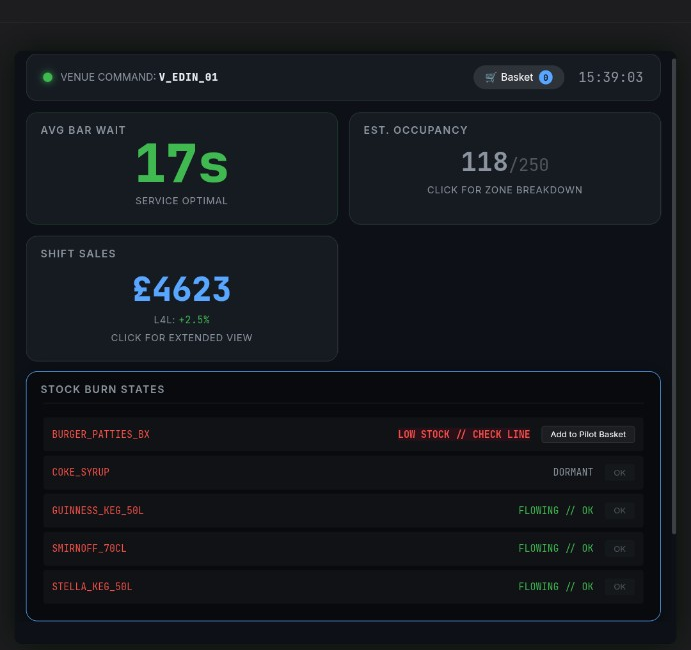
GiM is built and pilot-ready as a local-first utility layer for turning venue-side operational events into structured signals without forcing new hardware or disruptive installs.
Aggregate hospitality signal layer
A proposed anonymised index of operational patterns from independent and legacy venues, designed around aggregate insight rather than individual surveillance. It is not yet a market-scale product; the first live pilot is intended to test whether anonymised operational patterns can become useful, trusted hospitality signal reports.
The Void is GiM's discard-first privacy layer: data that is not needed for a defined signal should not be collected, stored, or sold.
Service note: Some data is not an asset. It is liability wearing a nice jacket.
Independent Bar Signal Project
Suppliers can usually see what venues order. They often cannot see what staff search for, forget, substitute, or clarify before the order happens.
The Independent Bar Signal Project tests whether anonymised lookup behaviour from MiX can reveal useful pre-order signals around brand recall, training gaps, menu execution, and substitution risk.
Early-stage pilot hypothesis. Not a claim of existing market-scale data.
Are staff remembering the brand or only the category?
Which serves need repeated lookup support?
Are promoted serves actually visible in staff workflows?
Where might named products be replaced by generic category behaviour?
Which accounts show signals that support is needed?
Where are useful signals currently trapped outside supplier systems?
Pre-order signal intelligence
Illustrative examples only. Not live venue data.
Staff repeatedly search 'Paloma,' but rarely search the named tequila brand in the venue spec.
Possible signal:The serve is known, but brand association may be weak.
A promoted gin spritz receives low lookup activity during service.
Possible signal:The serve may not be visible enough to staff.
Staff search 'margarita recipe' more often than the venue's branded margarita spec.
Possible signal:Training or menu recall may need support.
Service note: Menus do not fail in meetings. They fail when a new starter has to make the thing during a rush.
Venue-first. Privacy-conscious.
MiX is not staff surveillance.
The supplier signal layer is intended to work from aggregate operational patterns, not individual worker monitoring or customer-level data.
Service note: The fastest way to make a useful system radioactive is to collect data it never needed.
Pilot proposal
GiM Operations is preparing a venue-led Edinburgh live pilot to test MiX, GiM, and anonymised pre-order signal reporting in real hospitality conditions.
The first phase is designed to produce a simple anonymised signal report for supplier-side observers: what staff search for, where brand recall is weak, where training gaps repeat, and where support may be useful before the next order.
Additional independent venues may be invited once the first live report has been validated.
Supplier-side people
Is pre-order staff lookup behaviour useful, obvious, nonsense, already solved, or commercially valuable but hard to act on?
We are especially interested in supplier-side observers who can pressure-test whether these signals would change training, account support, activation, or field sales priorities.